Exceptional durability
A refined concrete surface suited to demanding interior environments when the slab and specification fit.

Miami · Concrete polishing
Plan a Miami project that turns the existing slab into the finished floor, with local access, use, finish, and care requirements in view.
The Concrete Master USA difference
A mechanically refined concrete surface for projects that want the slab itself to become the finished floor. Concrete polishing combines the slab's natural character with a carefully specified level of aggregate exposure and sheen.
It is not a covering. It is a project-specific finish built through evaluation, preparation, and mechanical refinement.
Concrete spaces for a higher standard
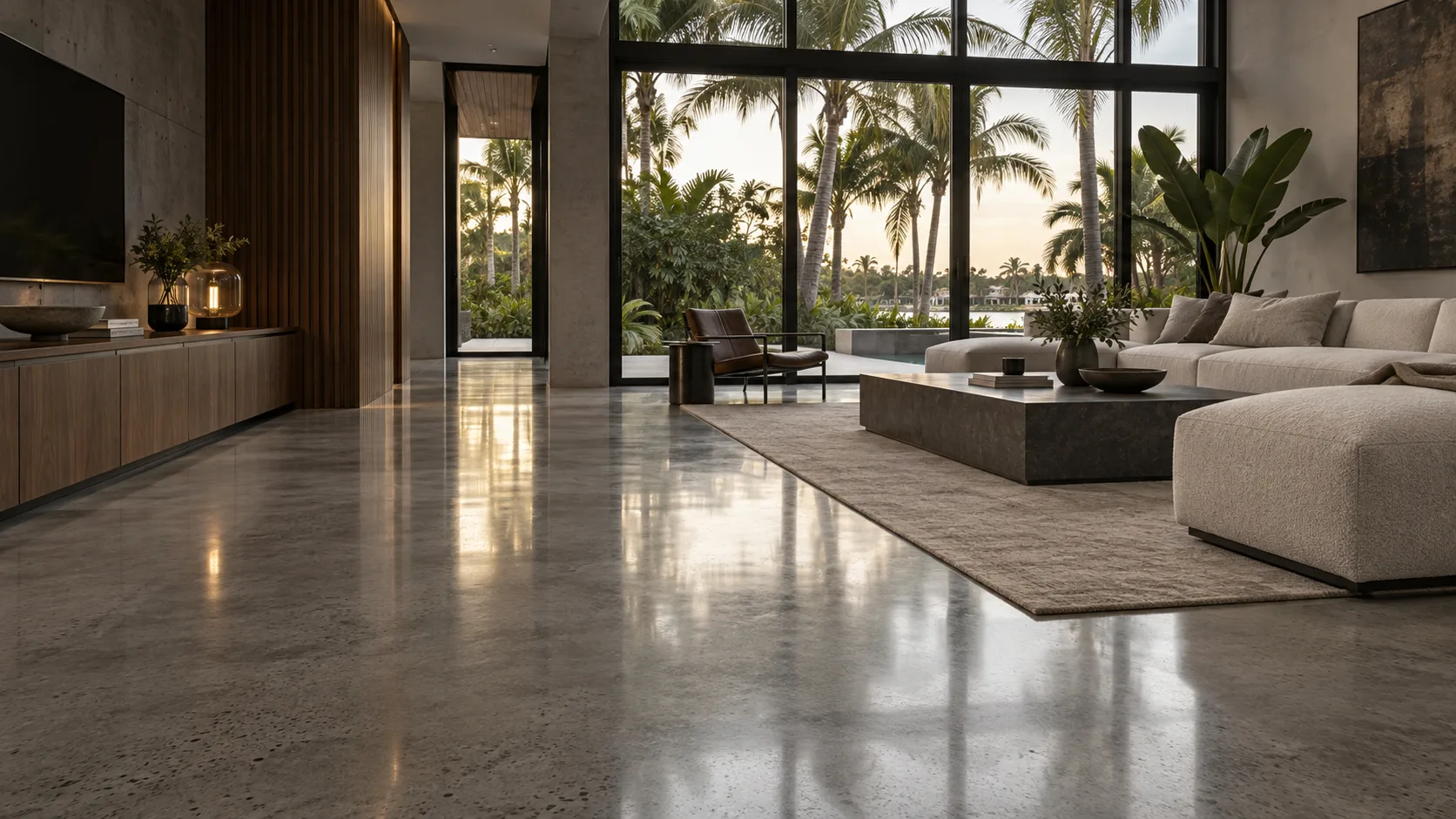
Miami · South Florida
For a Miami polishing project, the finish decision remains slab-led. Access, existing coatings, visible repairs, aggregate exposure, sheen, traffic, cleaning, work-hour constraints, and return-to-service needs belong in the same project conversation.
Review the complete concrete polishing guideDocument loading routes, elevators, occupied areas, work hours, protection needs, and when the floor must return to use.
Review the actual concrete, existing materials, damage, transitions, and site conditions before defining preparation or finish expectations.
Compare aggregate exposure, sheen, repair visibility, grip, traffic, and routine cleaning against the way the Miami space will operate.
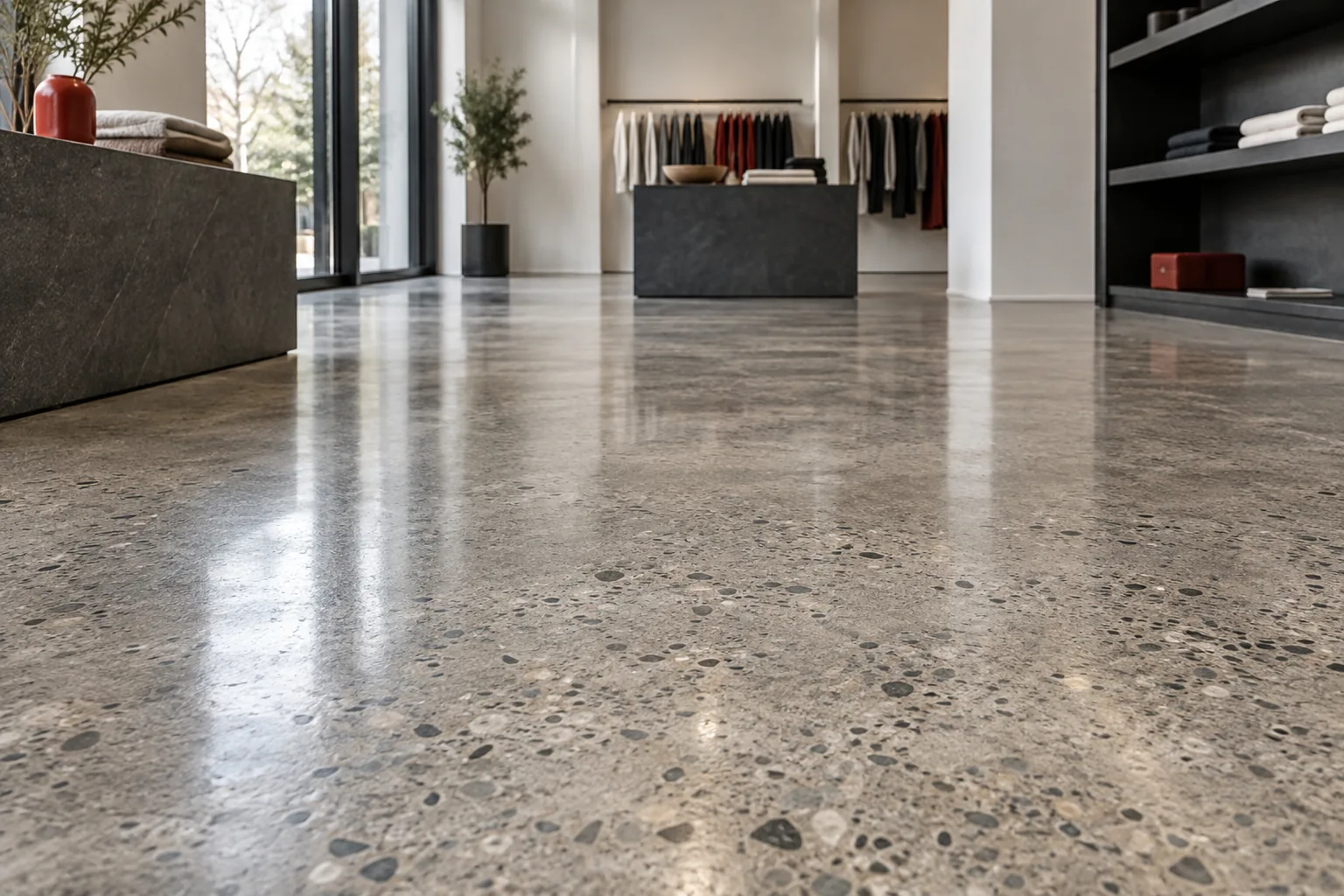
Explore aggregate exposure, sheen, preparation, and finished spaces that show how polished concrete turns the existing slab into part of the architecture.

The advantages are clear
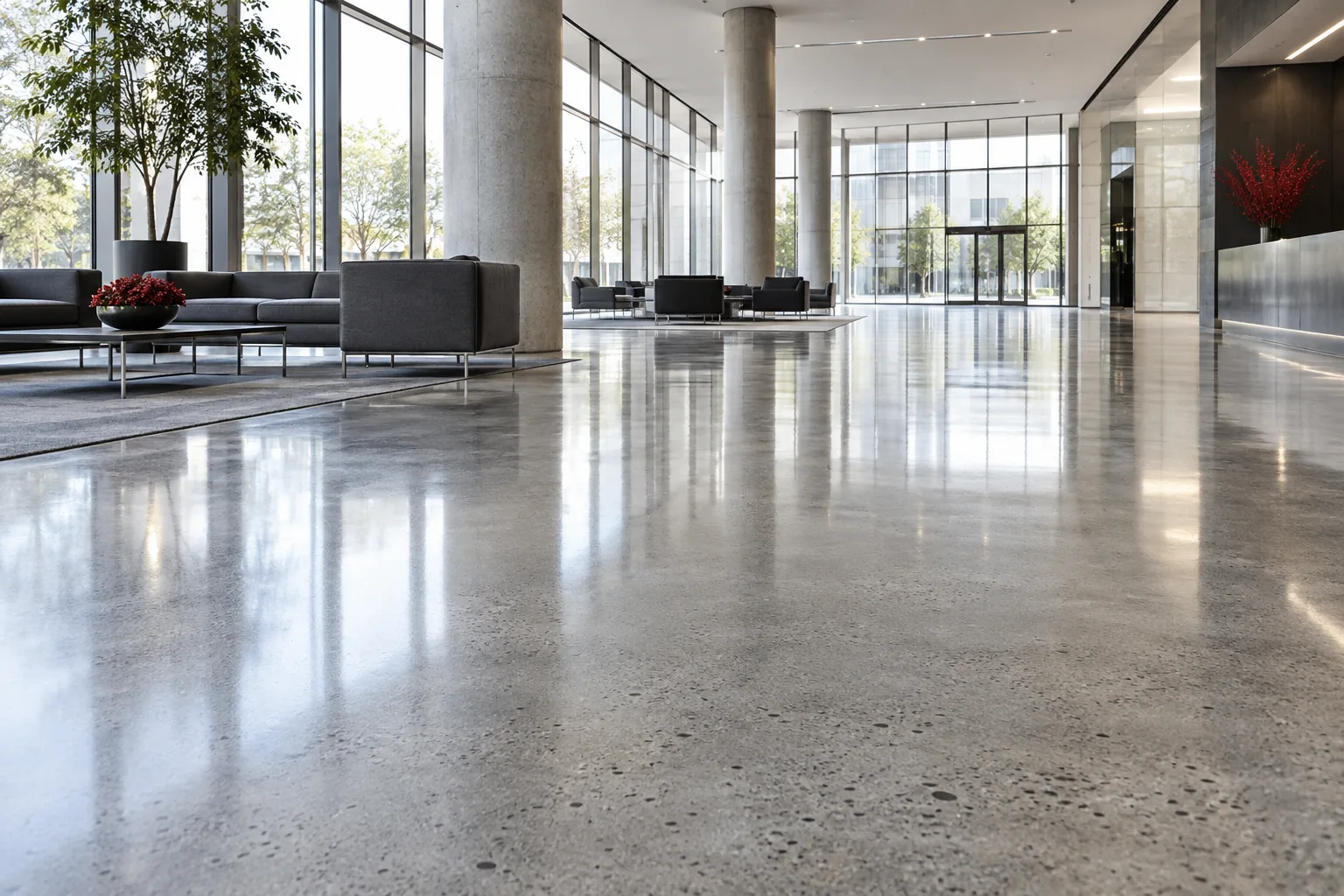
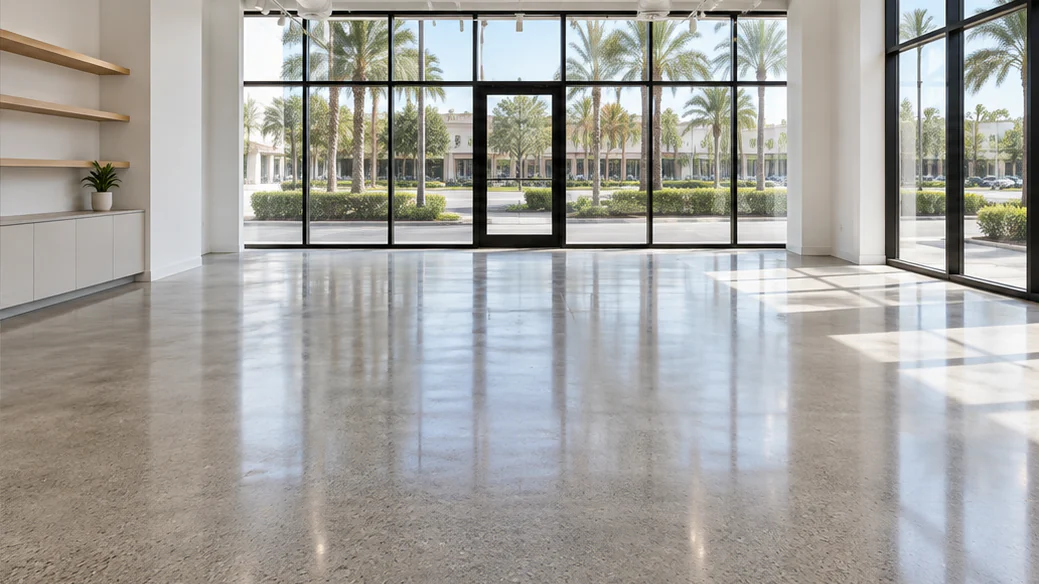
Polished concrete delivers more than a refined look—it turns the existing slab into a practical finished surface.
A refined concrete surface suited to demanding interior environments when the slab and specification fit.
A continuous floor with a practical care plan matched to the completed surface.
Protection and spill response are defined by the approved finish—not assumed from appearance alone.
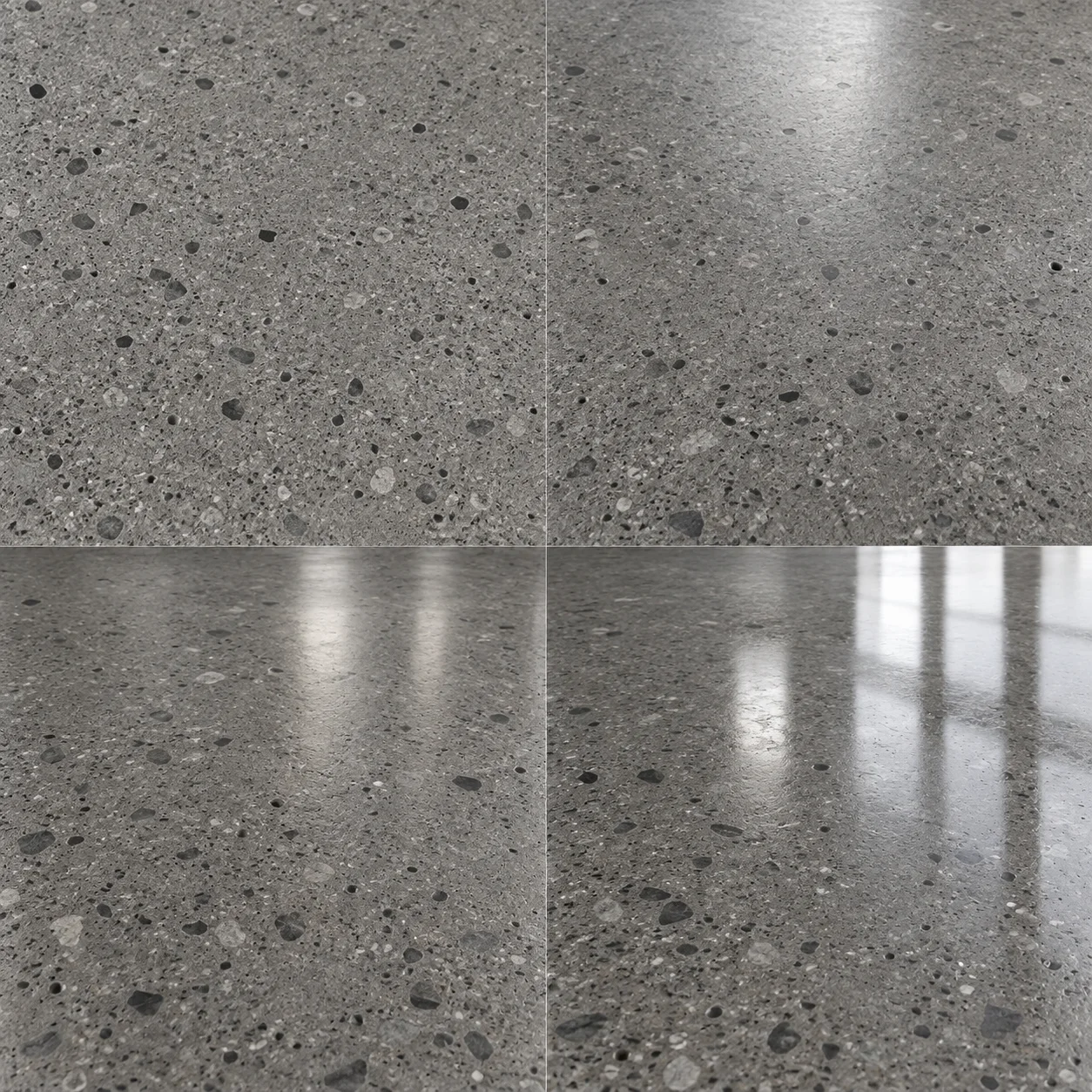
Natural slab character, aggregate exposure, and sheen become part of the design.
Higher sheen can help carry available light across an interior space.
The existing slab becomes the finished floor, with scope centered on preparation and refinement.
Tailored to your vision
Compare appearance samples against the actual slab. Exposure, repair visibility, and lighting all shape the result.
Help me chooseA smooth, natural finish with quiet reflection and a grounded architectural character.
A soft sheen that balances visual depth, available light, and day-to-day practicality.
A brighter finish with noticeable reflectivity and a more pronounced polished appearance.
A bold, highly reflective direction for slabs and spaces suited to a dramatic final sheen.
Our proven process
Every polished floor moves through a deliberate sequence shaped by the slab, the space, and the approved finish.
Describe the property, location, existing floor, priorities, intended use, and any schedule constraints.
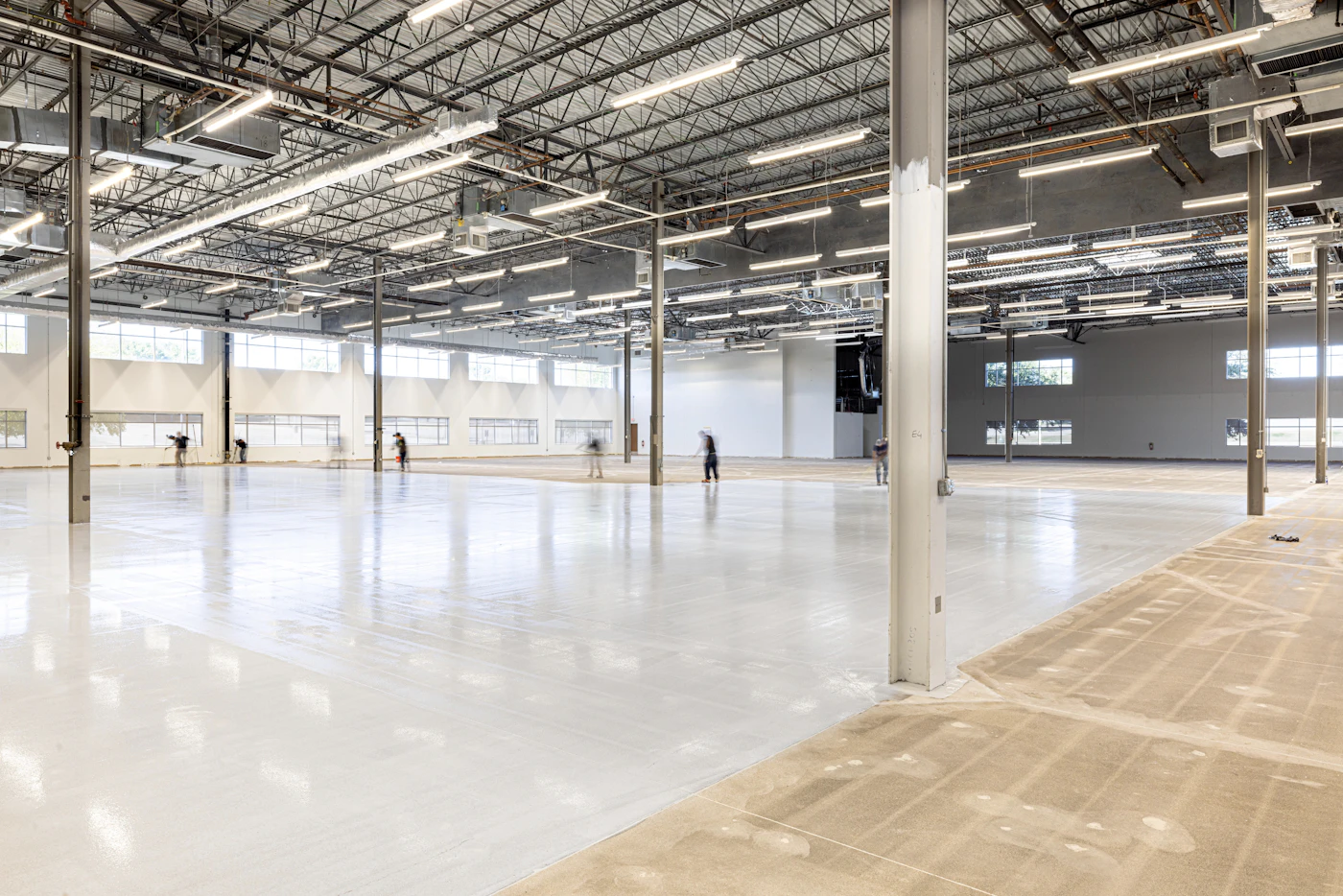
Repairs, existing materials, edges, and transitions are addressed to the agreed scope.
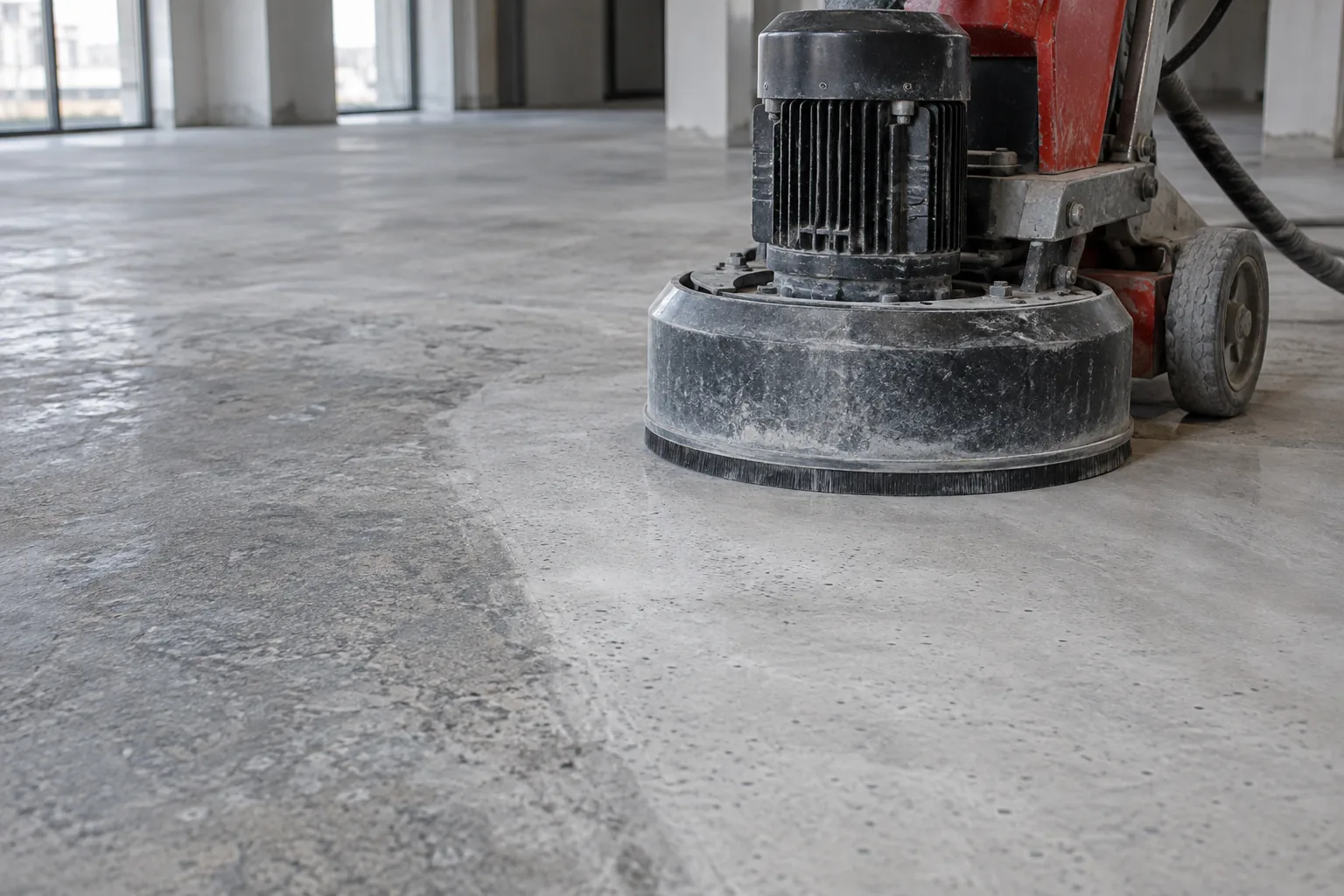
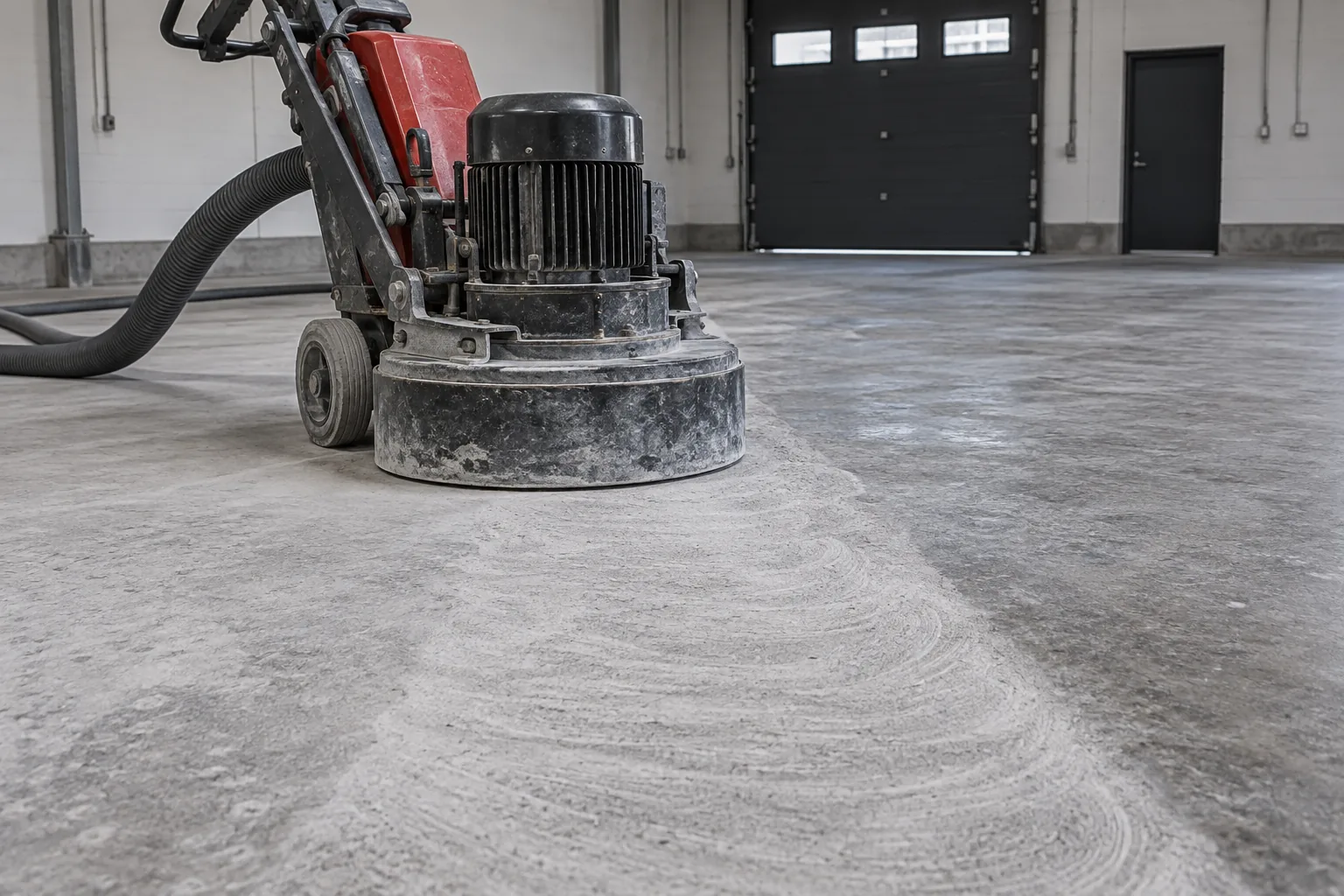
Progressive mechanical refinement begins at the specified aggregate exposure.
The surface is densified and refined toward the approved appearance and sheen.
Itemized protection is completed before a project-specific care handoff.
Polished concrete works everywhere
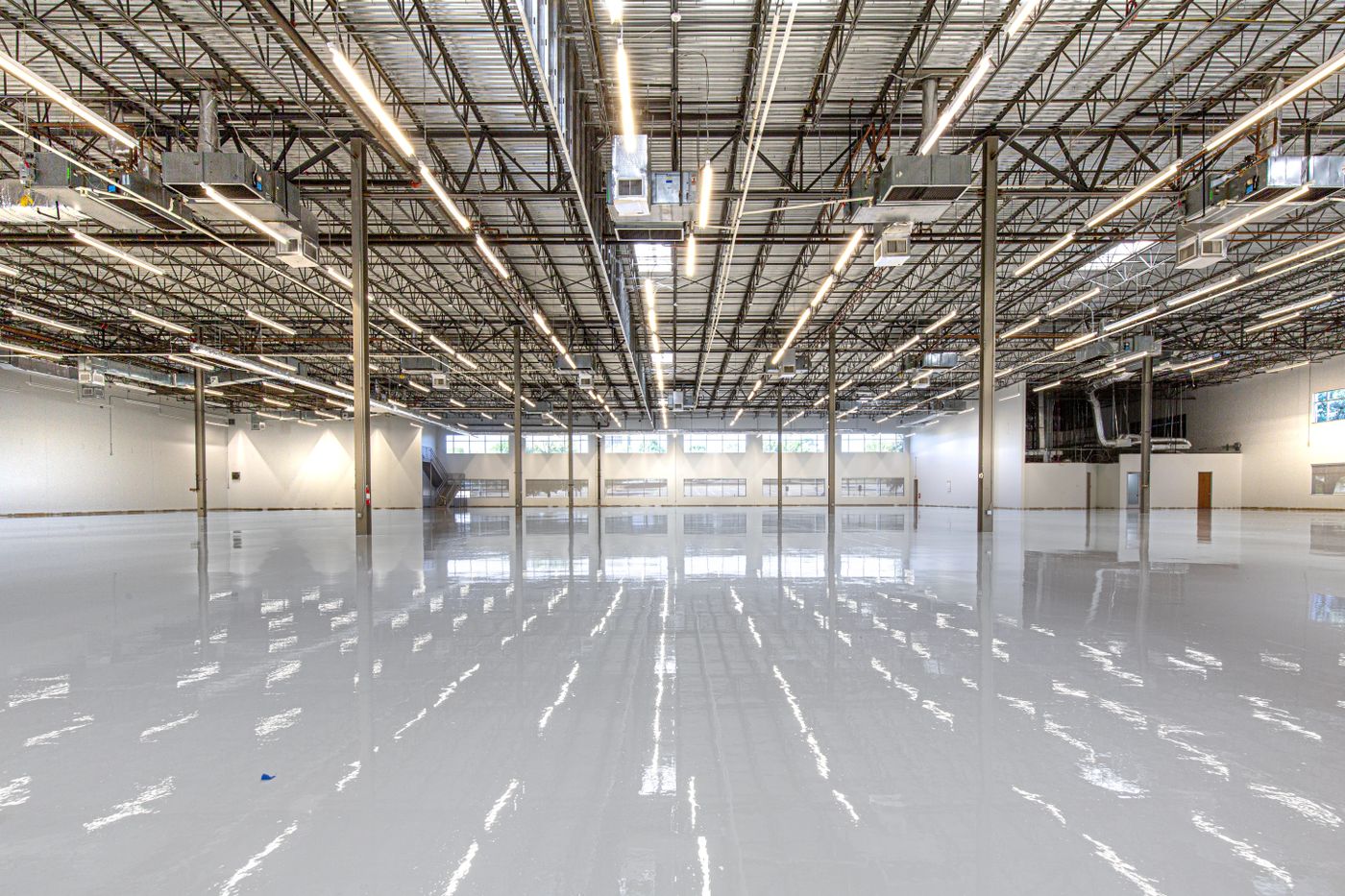
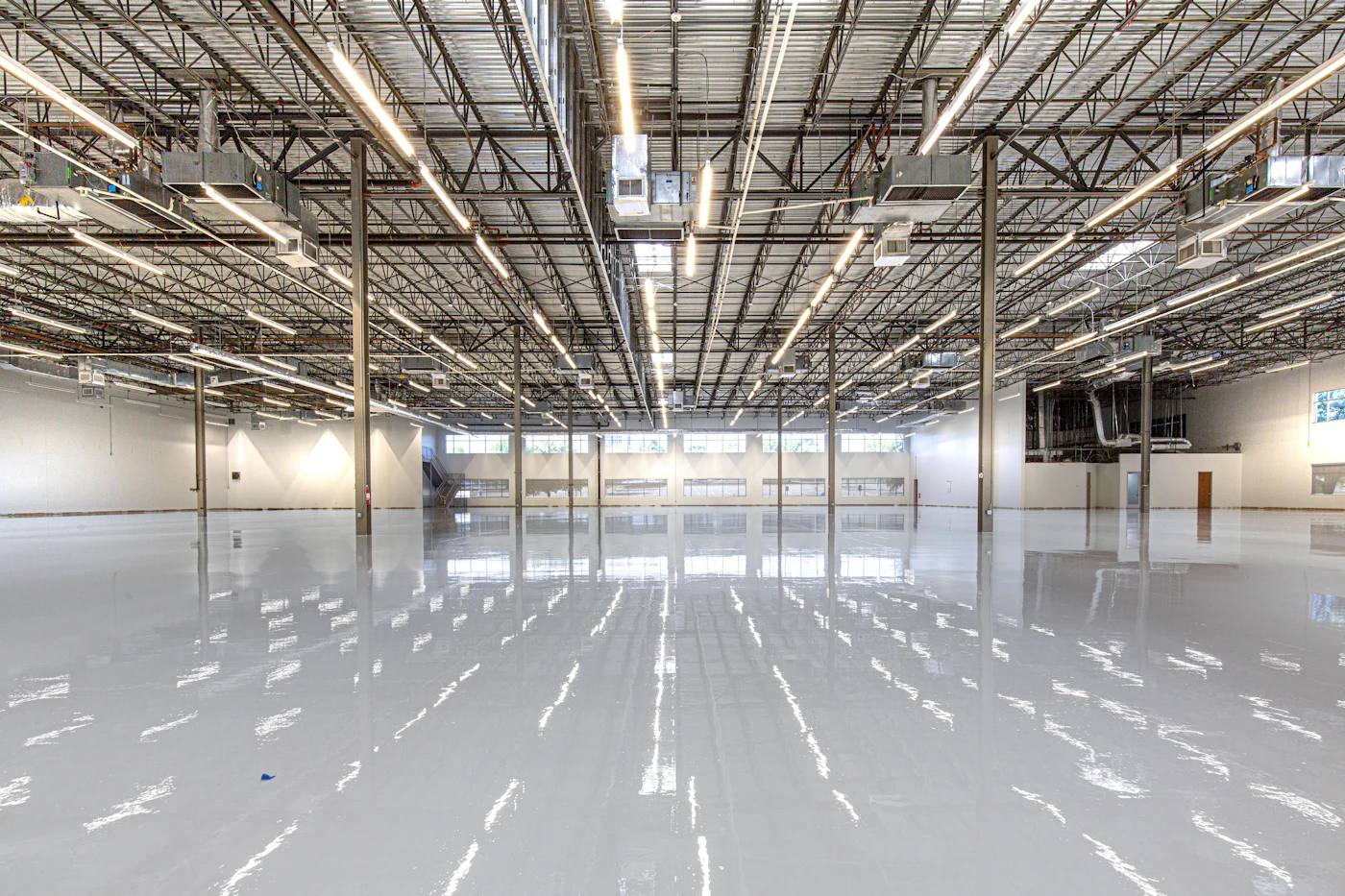
From modern homes to commercial and industrial spaces, the recommendation begins with the actual slab, use, access, and maintenance needs.
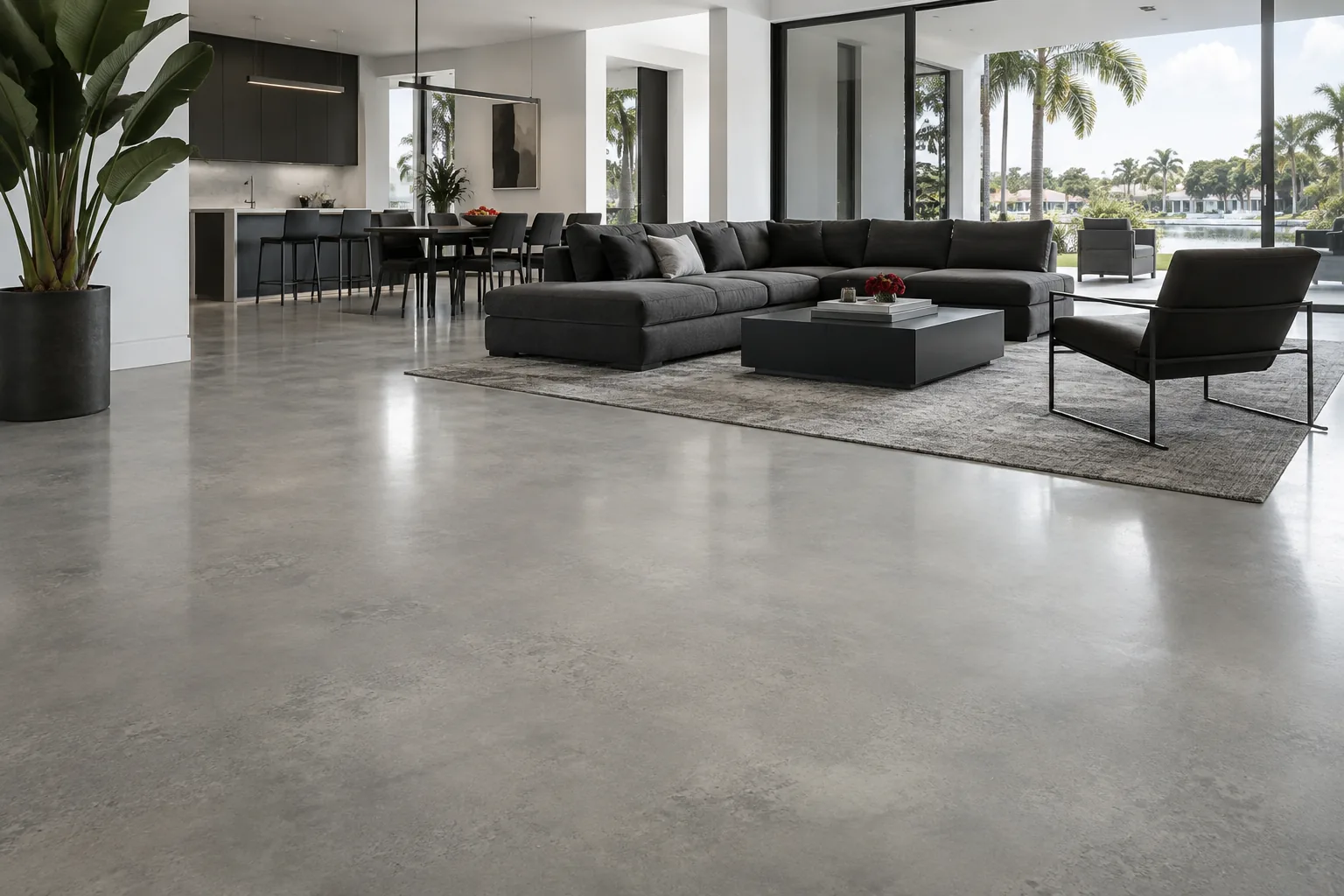
Stylish, durable floors for modern living.
Professional spaces with a clean, continuous finish.
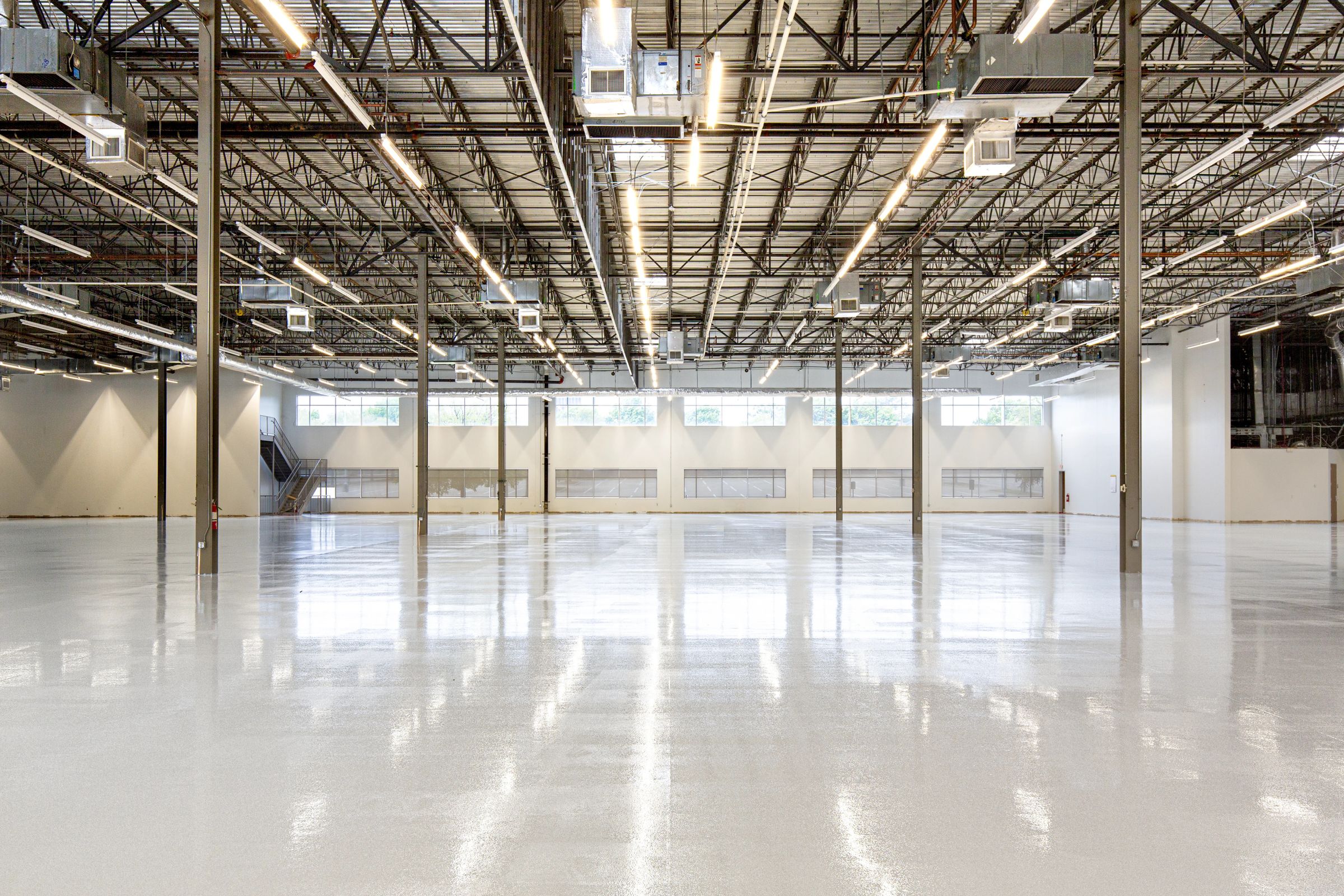
Working environments planned around use, access, and care.
More flooring paths in Miami
If polishing does not match the slab or finish direction, review these canonical service guides before choosing a system.
Answers to common questions
What to know about fit, process, finish, and care before a project-specific proposal is prepared.
The right starting point is a substrate and use review. Existing coatings, moisture, damage, traffic, cleaning, desired appearance, and required grip can all change the recommendation.
Area size, access, repairs, preparation, system build, cure stages, environmental conditions, and when the space must return to service all affect sequencing. A project-specific proposal should set expectations.
Use the cleaner, tools, and routine specified for the completed surface. Remove abrasive debris, address spills promptly, and keep walk-off protection clean; final guidance should match the installed finish.
Existing materials are reviewed during preparation planning. Coatings, adhesives, damage, and repair visibility can change the recommended scope and may need to be removed first.
Appearance samples should be reviewed against the actual slab. Aggregate exposure, sheen, lighting, natural variation, and repair appearance are considered together before the direction is approved.
Not automatically. Suitability depends on the slab condition, environment, intended use, preparation needs, transitions, and the project-specific performance and appearance goals.
Share the project address, property type, approximate floor area, current surface or coatings, visible repairs, intended use, finish direction, access constraints, schedule needs, and clear photos when available.