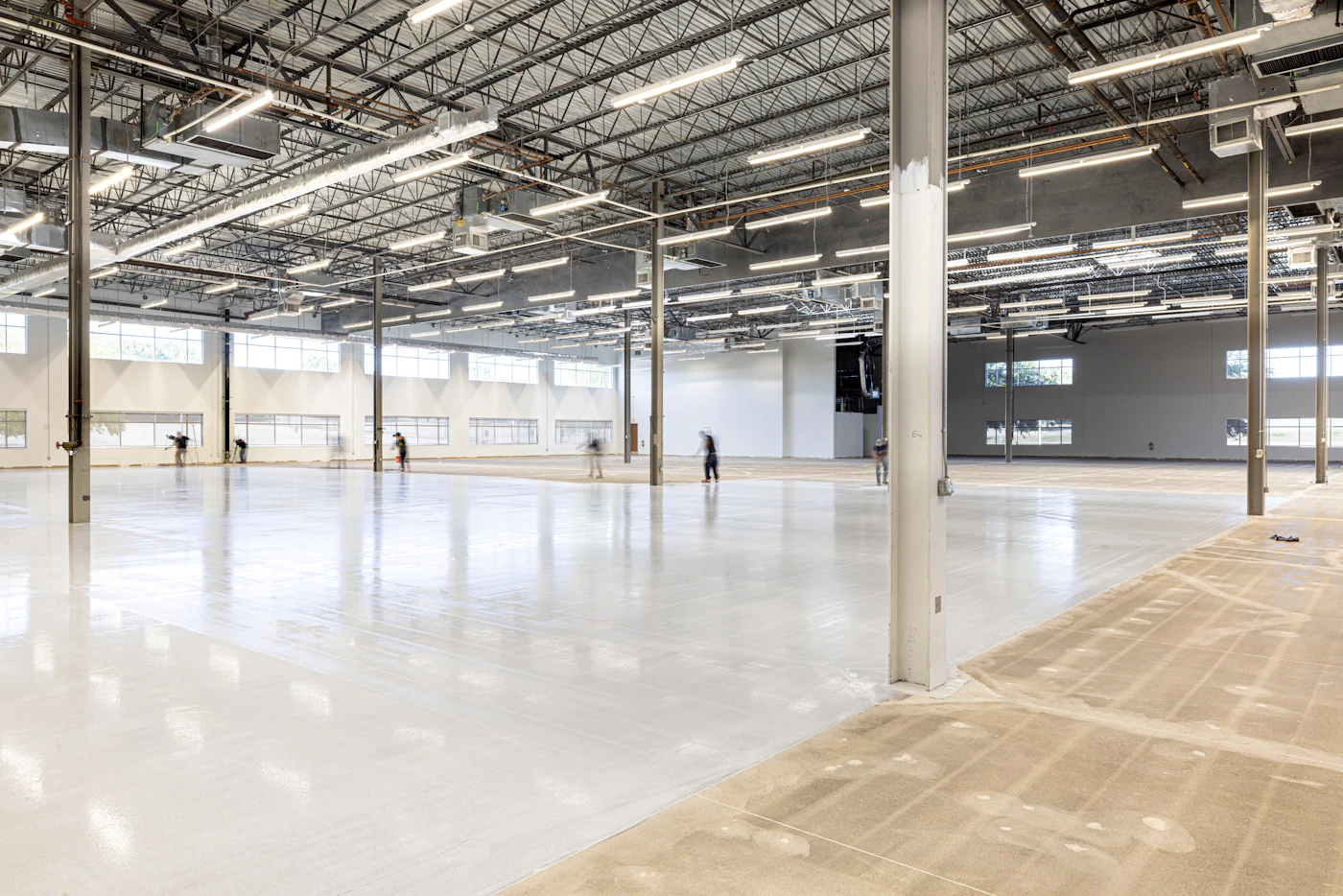

Start with the slab and the use
The finish decision begins with what is already on the floor and what the space needs to do every day.
Polished concrete uses the slab itself as the finish, while epoxy is a resinous system applied over prepared concrete. That distinction affects appearance, preparation, repair visibility, build, transitions, and maintenance.
Begin by documenting the existing surface, previous coatings or patches, joints, adjacent thresholds, drainage, traffic, cleaning routine, and the way the space must remain available during the project. Those facts give the comparison a useful foundation without asking you to diagnose the slab yourself.
Compare appearance honestly
The most helpful visual comparison is not simply glossy versus matte. It is whether you want the character of the existing concrete to remain visible or prefer a separate resinous finish with a selected color and build.
- Polished concrete can reveal natural slab variation, aggregate, repairs, and joints.
- Epoxy can introduce solid or decorative color and a specified system build.
- Neither path guarantees a perfectly uniform appearance; samples and written expectations matter.
Connect function to the system
Discuss traffic, cleaning, spills, sunlight, slip considerations, impact, operating hours, and acceptable downtime. The recommendation should connect those facts to a named preparation and finish scope.
Ask the estimator to explain which conditions point toward polishing the slab and which point toward adding a resinous system. A useful answer should connect the proposed process to the actual room, not rely on a finish name alone.
Read the preparation and transition details
Preparation is part of the finished result. Existing coatings, repairs, edges, penetrations, joints, drains, and changes in floor height can affect both the work sequence and how the completed floor meets nearby surfaces.
- Confirm how existing coatings or contaminants will be addressed.
- Identify which cracks, patches, and joints remain visible or receive treatment.
- Review thresholds, drains, wall edges, and transitions to adjacent flooring.
- Record access or cure conditions that affect when the space can be used again.
Use a site-specific proposal
Online guidance cannot replace a substrate assessment. Compare proposals by preparation, repairs, system steps, exclusions, cure or access conditions, and care—not only by finish name.
The clearest proposal gives you a common basis for comparing recommendations. If two scopes use similar finish labels but describe different preparation, repairs, or access assumptions, they are not describing the same work.